Pro Tips: 5 ways to keep your OKR rollout on track past the three-month mark

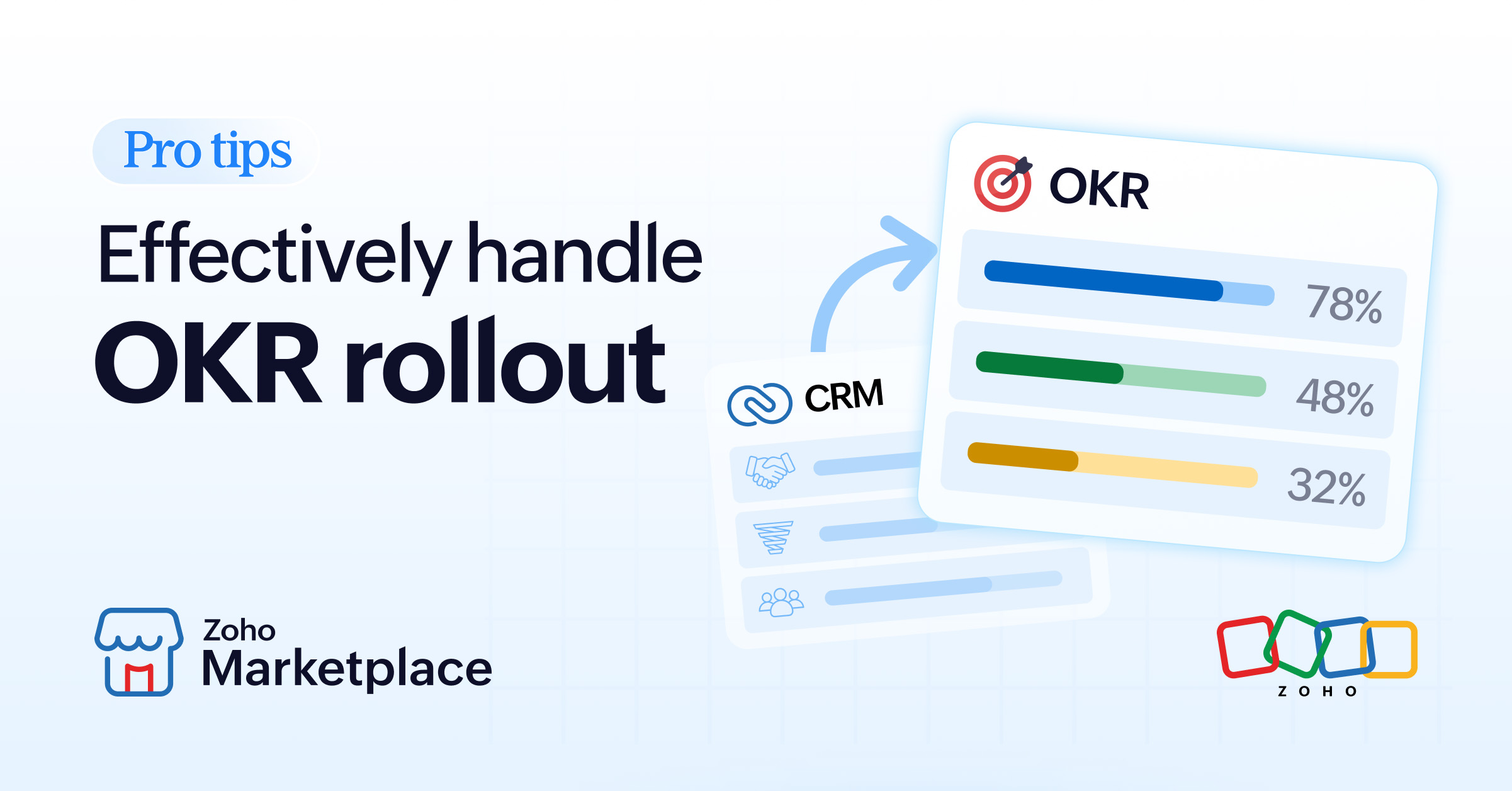
Three months into an OKR rollout is when the cracks appear. Manual tracking stalls, CRM data and strategic goals drift apart, and missed targets catch leaders by surprise. The good news is that these problems are predictable, and, with the right habits, they are avoidable. Here are five proven techniques to keep your rollout healthy all quarter long.
Tip 1: Align your CRM metrics to strategic OKRs from day one
Map each key result directly to a CRM metric, such as deals closed, pipeline amount, or new leads. Before your team starts selling, define the data source, target value, and update frequency for every one of them.
Outcome: Teams that connect CRM metrics to OKRs at setup avoid the three-month drift, where daily sales activity stops reflecting strategic goals.
Tip 2: Replace manual check-ins with automated data sync
Set up your OKR tracking so that deal stages, lead counts, and revenue figures flow into your key results automatically, rather than relying on people to update them by hand.
Outcome: Automated check-ins remove the number one reason OKRs get abandoned at 90 days. Sales teams spend their time selling, not updating spreadsheets.
Tip 3: Use pipeline visibility to catch misses before they happen
Bring your CRM pipeline data and OKR progress together in a single view, and set threshold alerts so the OKR owner is notified when confidence drops below 70% mid-quarter.
Outcome: Early alerts turn your rollout into an active management tool. Teams course-correct in week six, not week twelve.
Tip 4: Assign clear ownership for every sales KPI linked to an OKR
Give each key result tied to CRM data a single accountable owner. Cascade company revenue objectives down through an OKR tree to individual reps, each linked to their own CRM activity metrics.
Outcome: Individual ownership is the biggest predictor of OKR success at three months. Accountability becomes self-reinforcing rather than manager-enforced.
Tip 5: Run monthly OKR–CRM alignment reviews instead of quarterly postmortems
Hold a monthly 30-minute review that compares CRM performance data with OKR progress. Identify which pipeline deals are critical to key results and reprioritize before it’s too late.
Outcome: Monthly reviews prevent the “Q3 surprise,” those missed targets discovered in October that could have been caught in August.
Maximize your efforts with the right tools
Each of these techniques becomes effortless when your CRM and OKR platform share the same live data. Manually bridging a CRM and a standalone goal tracker is exactly where most rollouts break down. Teams lose trust in the numbers, and three months becomes a milestone for disappointment.
This is where the right tooling makes a difference. Profit.co for Zoho CRM can help you put every tip above into practice by connecting your Zoho CRM sales data directly to your OKR framework. Every deal closed and pipeline milestone then drives measurable progress toward your strategic goals automatically, with zero manual effort.

Comments